My phone’s library has accumulated samples of historical fiction, downloaded either after a recommendation from my favorite book podcast or through a Google recommendation. Lest these digital books merely crowd my phone storage to the brim, their digital covers hoarding precious space, I need to actually read them—and, more importantly, refresh my reading routine.
Yes, that’s paramount: getting back to a regular reading routine. I know what I want to read, but my reading has stagnated. I know this is unforgivable and without excuse, but there it is. The stories that have stayed with me, however, will probably lead me back to the reading route again. Hence, the rereading.
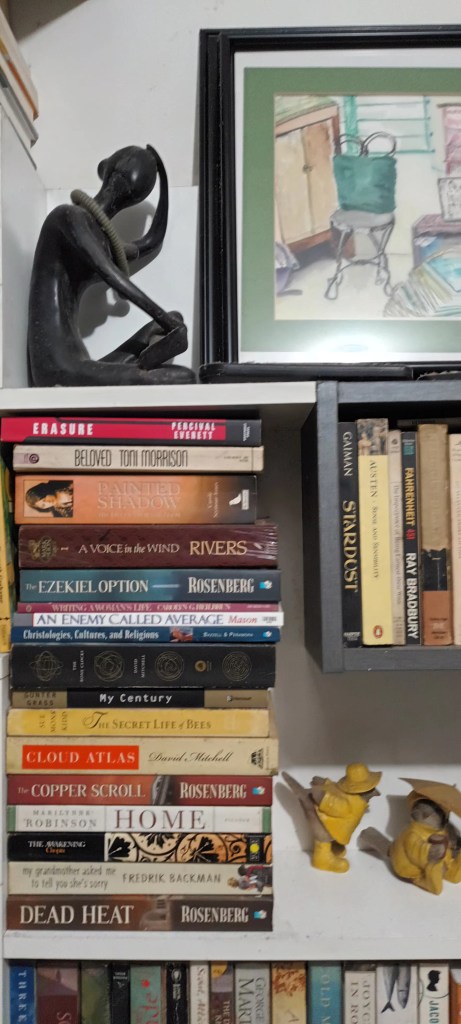
Back to My Books on the Shelf
I have accumulated books that made me swoon over history, following the world’s trajectory from empires to the present AI mold. History was never my favorite subject in school, although geography interested me. In high school, I even memorized the outline of the world as mapped for a project in my teens.
Historical fiction draws me in because it presents history through fictional characters framed within events, milestones, and catastrophes. Through their stories, places and people become more intimate. I may not particularly like wars, revolutions, migrations, occupations, or political upheavals, but give me a well-told story about them, and I can remain glued to the page.
Some of my best reads have history at their heart. Perhaps this is how I have come to understand why the world is both a mess and a wonder, living and dying at a pace nobody can predict. Historical fiction allows me to revisit the past through the lives of people who, though imagined, make history feel immediate and human.
And so, I’m returning to the books that have stayed with me.
Reading the Digital Books Again
The authors whose books I have downloaded and want to reread include Kristin Hannah, Han Kang, Min Jin Lee, Eric Gamalinda, Vin dela Serna Lopez, Linda Ty-Casper, and Jose Rizal.
In college, I read Ayn Rand’s novels sequentially. In college, she was my man.
The authors on my rereading list have stayed in my consciousness and influenced my interest in geopolitics. Kristin Hannah writes about women caught in history. Han Kang depicts bodies, souls, and spirits caught up in the massacres of Korea. Min Jin Lee traces Korean-Japanese relations across generations. Filipino writers return to the endlessly complex, never-quite-resolved matter of Philippine colonial history.
For Filipino authors, historical material is never exhausted. There are always more stories to tell, more perspectives to consider, and more questions about the past that refuse to go away.
As I finish each book, I hope to write a review. Always promised, never fulfilled. Forgive me. But rereading calls for new reflections, doesn’t it? I think I have become a different person, encountering these stories again, and I want to take note of what I understand differently now. One rereading at a time, my reflections will grow.
Besides, I should be serious about studying models for an ambitious historical novel I am planning. Yes, I said ambitious. Sorry, this is all still a dream (hahahaha). Reading, after all, is not only a pleasure but also a way to learn how the masters craft their worlds. I need to start with the books already on my phone.
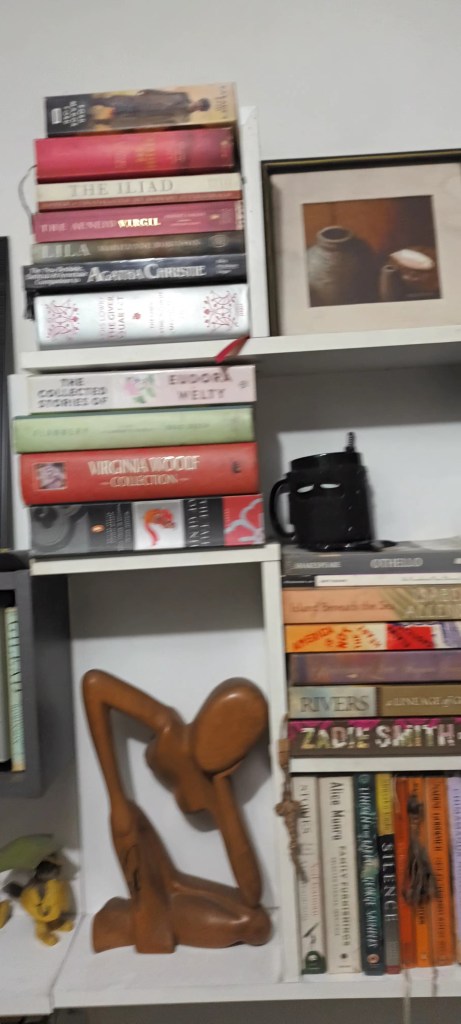
My Hardbound Favorites
Somebody asked me if I had read these books. Of course I have! That’s why they’re on my shelf. And besides, I’m ancient—how could I not have read them? Lol.
The problem is that I never really organized a reading plan. I simply read, and read, and read, through the night until my eyes failed me. I had no elaborate system; there were just the books I bought on sale or at National Book Store and the irresistible desire to finish them in one sitting. I realized that Gen X, Y, and Z readers (I merely gloss over which generation is which) seem to follow genres or subjects, reading along a clear trajectory. Whereas I read whatever caught my fancy.
There was a time when I bought books with critical badges stamped on their covers: National Book Award, Pulitzer, Booker, Newbery, and the like. And there were many times when I bought books from Booksale after an intense ukay, then read them simply because I had already bought them.
Then physical space became a problem, and I deposited my other books at the DLSU library (Yes, I have book privileges for my own books, thank you very much). Then I turned to Amazon and downloaded the Kindle app.
For a while, I left my hardbound favorites unopened, dust gathering along their edges while my bookmarks waited patiently between the pages. Their long wait ends now, I suppose, and the bookends will finally get some dusting, too.
The old pleasure of reading should keep me on the edge of my seat, this time with a new twenty-twenty vision (though still with reading glasses) after my cataract removal.
One book at a time. One review at a time, if I can manage it. And hopefully, fewer excuses.
Let me see how far I get.