Nanghihinayang
I guess I’m sentimental, if sentimental means I like the things I own. Why else would I keep notebooks I’m not even writing in? Some I bought because they are green. I like green. Others because they looked different, leather-bound, stitched. Now they’re all stacked inside a bag I use for storage instead of actually carrying it. I have at least six other bags sitting in my closet, unused.
Why do I keep those leather bags? Because I like them. I still do. I’ve always liked leather. But if I’m honest, the attachment isn’t even about memories or meaning. Nanghihinayang lang ako. My bags aren’t expensive expensive like high-end-branded pouches, just decent, durable, long-lasting local-leather expensive.
Nakakapanghinayang din kung di sila ginagamit. I should just let them go.
Donald Winnicott, a psychoanalyst, wrote about “transitional objects,” items like blankets or toys that children cling to as they learn to separate from their caregivers. These objects offer comfort and continuity when the world feels unstable. What I’ve realized is that as adults, we never fully outgrow transitional objects. We simply replace them with adult versions: bags, notebooks, phones, diaries, and other paraphernalia of productivity and memory.
Hindi Lang Yan Bag to Me
I hesitate to dispose of most of my bags. One satchel, in particular, used to be very useful for holding all my freelance things in a carefree way. Its ample space was like a sack, it simply received everything. I didn’t need to shut it tight, because I was working from home and used it only when I ran errands. I would flip the satchel open with its single lock, fast and easy, in a way that echoed my rushed deadlines.
I was younger then, less afraid, burdened only by the logistics of freelancing. Hindi lang ’yon bag sa akin. It was a companion in a certain season of my life.
Every time my purpose changed, every time my commute became more complicated, I looked for the appropriate bag. Leather first, because I don’t like bags that shed or peel from sweat and the weight of daily use. Second, it had to zip close, because I spent much of my workweek lining up for jeepneys, fighting for space in crowded buses, and standing cramped while holding onto train rails. Third, it had to be light, though leather rarely is, which is why I often ended up with two bags: one for the computer, another for everything else.
There had to be space for a fan and an umbrella, too. So I chose large bags that could fit all my basic necessities. A bit of vanity also went into my choices in that season when I was craving life balance, and tried (to camouflage despair) to match my bags with what I was wearing. I wasn’t collecting bags on purpose. It just happened.

Kanya-kanyang Hilig
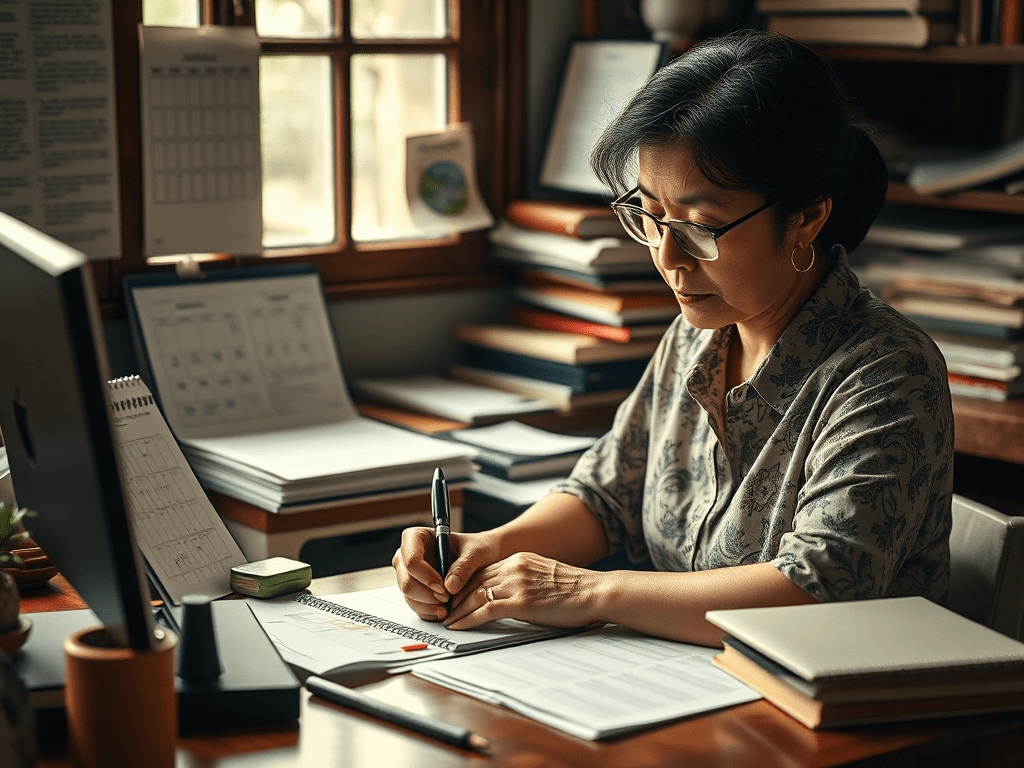
Kanya-kanya tayo ng hilig. Mine happens to involve paper and the tools for the life I have been yearning for. Psychologists who study object attachment say that possessions often work as extensions of identity. My notebooks aren’t just paper. They are proof that I like writing, that I expect myself to write, that I keep preparing for it. I stack paper for writing. Every bag I carry has a notebook.
And yet, many of my notebooks remain empty, stored away and never quite making it into my purse. This reveals something uncomfortable: despite how much I want to write, I have spent more time circling around the work than doing it with discipline.
Once we own something, we assign it more value than it objectively has. For me, notebooks hold potential versions of myself that have not yet fully materialized. To dispose of an unused notebook feels like admitting that some imagined future will never arrive.
Diaries are supposed to be heavy containers of memory. But do they still matter now, with the proliferation of note apps, online journals, blogs, and Substack pages?
Bagay na Malungkot
Research on autobiographical memory suggests that physical objects can trigger emotional recall more vividly than abstract thought. Things, after all, are carriers of meaning, even when that meaning has not yet been fully realized. Studies on hoarding disorder show that difficulty discarding possessions is often linked to anxiety, grief, and fear of loss; the object becomes a stand-in for safety. When my space grows crowded with folders from old projects, cords whose devices no longer exist, and printed materials I have not touched in years, they seem to whisper, you might need me, keeping me tethered to past obligations and unfinished projects. Instead of upgrading the present, they demand dusting, fixing, caretaking. Naging mga bagay na malungkot.
With objects holding my memories, I sometimes wonder: when I open the brittle pages of my diary, feeling as age-worn as its fraying binding, and when I consider tearing, shredding, or tossing them away, am I erasing parts of myself? Maybe.
When my mother died, she left behind an old wooden sofa set inlaid with buli, a molave dresser, a narra aparador, and a worn-out Singer sewing machine. She cherished these not for their price or polish, but as implements of longing for security, stability, and a lasting sense of home. In the same way, I hoard observations, moments, and insights that emerge in the work with language. Notebooks and diaries are relics of personal history, capable of giving birth to new ideas. Each thing is like pin on a map, marking a path I’ve trodden. Sentimental by nature, I keep hoarding and bagging these proofs of where I have been and where I am going.